Put to Paper, Century After Century
Long before HPLC and mass spectrometry, there were scholars who tasted, observed, and wrote. Their record of Ganoderma spans two millennia — and still holds up.
The Book That Started It All
The Shen Nong Ben Cao Jing (神农本草经) — the Divine Farmer's Classic of Materia Medica — was compiled around 200 CE during the Eastern Han dynasty. It is the oldest surviving Chinese herbal text, cataloguing 365 substances in three tiers.
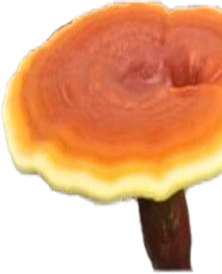
Ganoderma appears in the Superior class — not as one entry, but as six. The text distinguishes Ganoderma by color: Green (青芝), Red (赤芝), Yellow (黄芝), White (白芝), Black (黑芝), and Purple (紫芝). Each is assigned a flavor, a nature, and a set of organ affinities.
| Color | Chinese Name | Flavor | Organ Affinity | Primary Action (per text) |
|---|---|---|---|---|
| ● Green | 青芝 (Longzhi) | Sour | Liver | Brightens the eyes, supports Liver function |
| ● Red | 赤芝 (Danzhi) | Bitter | Heart | Nourishes the Heart, calms the spirit |
| ● Yellow | 黄芝 (Jinzhi) | Sweet | Spleen | Strengthens the Spleen, supports digestion |
| ○ White | 白芝 (Yuzhi) | Pungent | Lung | Supports respiratory function |
| ● Black | 黑芝 (Xuanzhi) | Salty | Kidney | Benefits Kidney and foundational essence |
| ● Purple | 紫芝 (Muzhi) | Sweet | Heart, Liver | Nourishes essence, supports joints and sinews |
Li Shizhen and the Compendium (1578)
If the Shen Nong Ben Cao Jing is the foundation, Li Shizhen's Ben Cao Gang Mu (本草纲目) — the Compendium of Materia Medica, completed in 1578 after 27 years of work — is the cathedral. At 1,892 entries and over a thousand illustrations, it is the most comprehensive herbal encyclopedia in Chinese history.
Li Shizhen devoted significant attention to Ganoderma. He confirmed its Superior classification, elaborated on its actions, and — crucially — added clinical observations accumulated over the 1,400 years since the Shen Nong text. His entry on Red Ganoderma notes:
"长期服用,轻身不老,延年神仙"
— Taken over the long term, it lightens the body, delays aging, and extends the years.
The phrasing here is important. "Lightens the body" (qing shen, 轻身) does not mean weight loss — it describes a subjective feeling of ease, of not being weighed down. "Delays aging" (bu lao, 不老) is the traditional language of health preservation, not a literal claim of immortality. "Extends the years" (yan nian, 延年) describes what we would now call healthspan — living well for longer, not simply living longer.
Shen Nong Ben Cao Jing
Circa 200 CE — the original Ganoderma classification into six colors
Ben Cao Gang Mu
1578 — Li Shizhen's compendium, the definitive reference
Bao Pu Zi
4th century — Ge Hong's alchemical text, references to Zhi as a longevity substance
The Six Colors: More Than Color Coding
Modern mycologists might see the six-color classification and dismiss it as pre-scientific taxonomy. That would miss the point. The ancient authors were not trying to identify species — they were describing patterns of action. Each color corresponded to a flavor, an organ system, and a set of observed effects. This is functional classification, and it is remarkably consistent with what we now know about the different bioactive profiles of Ganoderma species and growth stages.
From Imperial Courts to Modern Shelves
For most of its recorded history, Ganoderma was not a commodity. It was rare — found only in remote forests, collected by specialists, reserved for the imperial court and wealthy households. Paintings and carvings from the Ming and Qing dynasties show Ganoderma as a symbol of longevity and good fortune, often held by deities or immortals.
It was not until the late 20th century — with the development of controlled cultivation techniques in China, Japan, and Korea — that Ganoderma became accessible to ordinary people. The mushroom that emperors once sought as tribute is now available to anyone with an internet connection. The mystique remains, but the supply has been democratized.
What the Ancients Could Not Have Measured
It is worth acknowledging what the old texts got right — without any of our modern tools. They identified Ganoderma as safe for long-term use (confirmed). They noted its effects across multiple organ systems (confirmed). They described its affinity for the heart, liver, and kidneys (consistent with modern organ-specific studies). And they ranked it among the most valued substances in the entire pharmacopoeia.
They did not know about triterpenoids or polysaccharides or germanium. They did not need to. They had observation, documentation, and the willingness to trust what repeated experience showed them.
Two thousand years of written history. One mushroom. Grown the way the ancients would have respected.
Shop Ganoderma Read: TCM Perspective